.png)


Thermowell Guide: Purpose, Design, and Key Industrial Useshermowell Guide: Purpose, Design, and Key Industrial Uses
- Tempsens

- Dec 10, 2025
- 3 min read
Updated: Dec 17, 2025

Why Thermowells Matter in Temperature Measurement
In industrial environments, temperature sensors face some of the harshest conditions imaginable. They are installed in hot pipelines, high-pressure steam lines, corrosive chemical systems, and fast-moving process fluids—yet they are expected to deliver accurate readings 24/7.
Even durable sensors like RTDs and thermocouples cannot survive long in such conditions on their own. That’s exactly why thermowells are used.
A thermowell acts like protective armor for the sensor. It allows the sensor to “see” the process temperature while shielding it from direct exposure to pressure, flow, and corrosive media. This means you can:
Measure temperature safely
Keep the process sealed and leak-free
Remove or replace the sensor without shutting down the system
Engineering-focused companies such as Tempsens design thermowells specifically to withstand these real-world conditions.
What Is a Thermowell and Why Is It Needed?
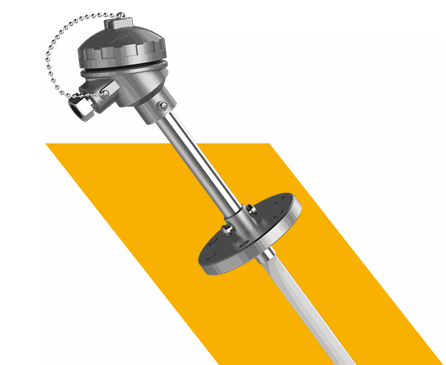
A thermowell is essentially a closed-end metal tube that extends into a process line or vessel. The temperature sensor slides inside this tube and is held securely using a fitting or spring arrangement.
The process fluid flows around the outside of the thermowell, while the sensor stays protected on the inside.
This design solves several major challenges:
Shields the sensor from corrosion, erosion, and mechanical impact
Allows sensor replacement without draining the line or stopping production
Extends the life of both the sensor and the instrumentation system
For plants that run continuously, the ability to replace a sensor without shutting down operations is a major advantage.
Key Functions of a Thermowell
A properly engineered thermowell serves several important roles:
Prevents mechanical damage and chemical attack on the sensor
Allows sensor removal or calibration without opening the process
Improves long-term measurement stability by reducing vibration
Maintains pressure integrity and supports safer operation
Far from being just a “metal sleeve,” a thermowell forms a crucial part of a plant’s temperature-measurement system.
Common Thermowell Designs in Industry
Different industrial processes require different thermowell constructions. The most widely used types include:
Threaded Thermowell
Screws into a tapped connection
Used in general-purpose and moderate-pressure applications
Flanged Thermowell
Bolted to a matching flange
Ideal for high-pressure systems and larger pipelines
Provides a strong, gasketed seal
Weld-In Thermowell
Welded directly into the pipe or vessel
Used in high-integrity applications where leaks cannot be tolerated
Socket Weld Thermowell
Welded into a socket fitting
Compact and reliable for tight spaces
Manufacturers like Tempsens determine the right design based on pressure, temperature, flow velocity, and relevant design standards.
Where Thermowells Are Commonly Used
Thermowells are used anywhere reliable temperature measurement is required under harsh operating conditions, including:
Power plant boilers, steam lines, and turbines
Oil and gas pipelines, separators, and refineries
Chemical reactors and distillation systems
HVAC and district heating networks
Food and pharmaceutical processes
Water and wastewater treatment
High-temperature systems in metal, glass, and cement plants
In all these areas, the thermowell protects the sensor and extends its service life.
How Thermowells Support Accuracy, Safety, and Uptime
A well-designed thermowell has a direct impact on measurement accuracy and overall plant reliability.
By minimizing vibration and flow-induced turbulence at the sensor tip, thermowells help produce stable, repeatable temperature readings, enabling:
Better process control
Improved product quality
Reduced scrap or batch failure
From an operational standpoint, thermowells also deliver:
Longer sensor life
Fewer instrument failures
Reduced maintenance shutdowns
A safe, sealed barrier between process media and the external environment
As industries continue to shift toward smart, connected systems, thermowells—especially high-quality ones produced by Tempsens—remain an essential but often overlooked component that ensures accurate, safe, and dependable temperature measurement.

Comments